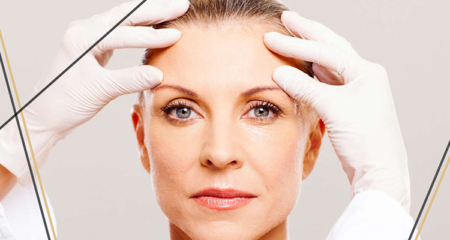

What is Thread Face Lift?
minimally invasive aesthetic procedure applied to individuals with mild to moderate skin laxity to support facial contours and help achieve a more youthful appearance . During the procedure, biocompatible medical threads are placed under the skin, mechanically repositioning the tissues. The aim is also for the threads to stimulate collagen production over time.
This method, which can be considered an alternative to surgical facelift, is preferred because it does not require incisions, the procedure time is short, and it allows for a quick return to daily life. However, surgical facelift may be a more suitable option for individuals with advanced skin sagging.
Thread facelift procedures should be planned individually for each patient, and facial anatomy should be evaluated in detail.
Who is a suitable candidate for Thread Face Lift?
Thread facelift is a treatment option that can be considered for individuals with mild to moderate skin laxity in the face and neck area who do not want to undergo surgical facelift and are looking for a procedure with a shorter recovery time.
The following individuals are generally considered suitable candidates:
- Individuals with mild to moderate skin sagging
- Individuals who want their jawline to appear more defined
- Individuals experiencing mild volume loss and sagging in the cheek area.
- Patients with mild drooping in the eyebrow and temple area.
- People who do not want surgery
- Adults with sufficient skin elasticity
- Individuals whose general health status is suitable for the procedure.
- People with realistic expectations
For patients with severe skin sagging, a surgical facelift may be a more suitable option. The most appropriate treatment plan should be determined after a detailed evaluation of facial anatomy.
Who might not be suitable for thread facelift surgery?
Like any cosmetic procedure, thread facelift is not suitable for everyone.
Different treatment options may be considered in the following situations:
- Individuals with severe facial and neck sagging
- Patients with significantly reduced skin elasticity
- Individuals with active infections in the application area
- Individuals with uncontrolled chronic diseases
- People who are pregnant or breastfeeding
- Patients with unrealistic aesthetic expectations
The decision regarding suitability for treatment should be made on an individual basis after a thorough medical examination.
For what purposes is thread facelift performed?
Thread facelift surgery aims to reduce mild skin laxity caused by aging and to support facial contours.
In suitable patients, planning can be done with the following aesthetic goals in mind:
- Supporting the facial oval.
- Making the jawline more prominent
- Tightening of mild sagging in the cheek area.
- Slightly raising the outer part of the eyebrow
- Helping to reduce sagging in the chin area.
- To achieve a more vibrant and youthful facial appearance.
- Supporting collagen production
The results obtained may vary depending on the individual’s skin type, age, and the thread technique used.
Which areas can be treated with thread facelift?
Thread facelift can be applied to different anatomical areas of the face and neck.
The most common areas where the procedure is performed are:
- Cheeks
- Jawline
- Chin area
- Neck
- Temple area
- Around the eyebrows
- Middle face
- Lower face contour
The type of thread to be used, the placement technique, and the application plan for each area are determined according to the patient’s needs.
How is a Thread Face Lift Performed?
Thread facelift is a minimally invasive procedure performed in a clinical setting.
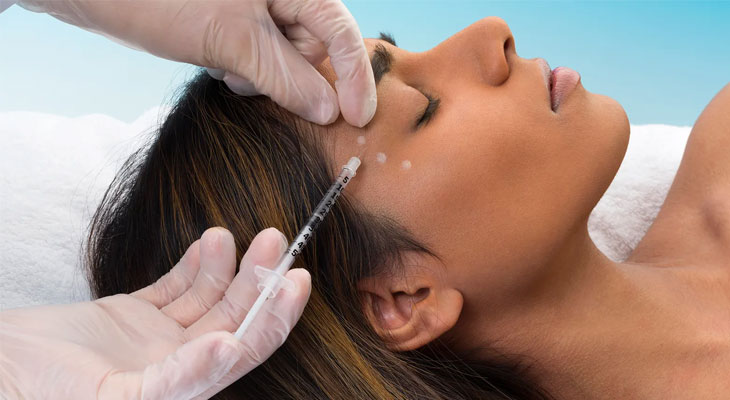
Before the procedure, the areas to be treated are marked, and local anesthesia is administered to ensure patient comfort.
Next, using thin cannulas or special needles, biocompatible medical threads are placed under the skin in the appropriate anatomical plane. Thanks to the placed threads, loosened tissues are repositioned in a controlled manner, and the facial contour is supported.
During the process;
- No surgical incision is made.
- General anesthesia is not required.
- No stitches are applied.
- Hospitalization is not required.
The procedure usually takes between 30 and 60 minutes to complete, depending on the size of the area to be treated.
What are the Thread Face Lift Methods?
The structure of medical threads used in thread facelift procedures and the application technique can vary depending on the desired outcome. The same method is not suitable for every patient. Therefore, thread selection should be made considering skin type, degree of sagging, and facial anatomy.
The most commonly used types of rope today are:
- PDO (Polydioxanone) threads: Aim to provide skin support and stimulate collagen production.
- PLLA (Poly-L-Lactic Acid) threads: These are biocompatible threads that can support collagen production for a longer period.
- PCL (Polycaprolactone) straps: Thanks to their flexible structure, they can be among the options that provide support for a longer period of time.
- Cog threads: These threads, with their small protrusions, help to mechanically lift tissues upwards.
- Monofilament threads: These are primarily preferred to improve skin quality and support collagen production.
The type of thread to be used should be determined individually for each patient after a thorough examination.
Pre-Trope Facelift Assessment
A detailed facial analysis is necessary before the procedure to achieve a successful outcome.
During the examination, the following criteria are generally evaluated:
- Skin elasticity
- Degree of sagging
- Facial oval
- Jawline
- Neck contour
- Skin quality
- Previously performed cosmetic procedures
- General health status
- Patient expectations
Based on this assessment, the number of ropes to be used, the type of rope, and the placement plan are determined.
What should be considered before a thread facelift?
Some recommendations to follow before the procedure can support both safety and the recovery process.
Generally;
- Medications being used should be shared with the doctor.
- Blood-thinning medications should only be considered on the recommendation of a doctor.
- Avoiding cigarettes and tobacco products as much as possible is recommended.
- Alcohol consumption may be restricted prior to the procedure.
- There should be no active infection at the application site.
- The skin should be considered clean.
Since recommendations may vary for each patient, it is important to follow your doctor’s instructions before the procedure.
Recovery Process After Thread Face Lift
The recovery process after a thread facelift is usually quick. Most patients can return to their daily lives the same day.
The following symptoms may be observed in the first few days:
- Mild swelling
- Redness
- Sensibility
- A slight feeling of tension.
- Rarely minor bruises
These effects usually subside on their own within a few days.
Following your doctor’s recommendations and protecting the treated area after the procedure will support the healing process.
What precautions should be taken after a thread facelift?
To maintain the position of the threads after the procedure and to support healing, it is recommended to follow certain guidelines.
Generally;
- Pressure should not be applied to the face for the first few days.
- Avoid lying on your stomach.
- Excessive facial expressions may need to be restricted in the initial days.
- Taking short breaks from strenuous exercise may be recommended.
- Saunas, Turkish baths, and excessively hot environments should be avoided for a certain period of time.
- The skincare routine recommended by the doctor should be followed.
- Follow-up appointments should not be missed.
The recovery process can vary from person to person.
When can I return to daily life after a thread facelift?
One of the most important advantages of thread facelift is that it does not affect social life for a long time.
Most patients have the procedure the same day or the next day;
- He can return to work.
- They can continue their daily activities.
- He can continue his social life.
Mild swelling or tenderness is normal and usually resolves quickly.
When will the results of a thread facelift be visible?
One of the most important features of thread facelift is that the mechanical lifting effect is immediately noticeable after the procedure. However, due to slight swelling that may occur after the procedure, the appearance achieved in the first few days may not reflect the final result.
In addition to the supportive effect of the threads under the skin, increased collagen production over time can lead to more natural-looking results.
Generally;
- The initial lifting effect may be visible after the procedure.
- The swelling will decrease within the first few weeks.
- With increased collagen production, gradual changes in skin quality can be observed.
- Final results are assessed in most patients within 1 to 3 months .
The time it takes for results to appear may vary depending on individual skin type and biological healing process.
How long does the effect of thread facelift last?
Thread facelift is not a permanent procedure.
The duration of the effect obtained;
- The type of rope used,
- Skin elasticity,
- Age,
- Life style,
- Collagen production capacity
This can vary depending on factors such as those mentioned.
the lifting effect achieved in many patients can last for 12 to 24 months . After this period, since the aging process will continue, a repeat application can be planned with a doctor’s evaluation if needed.
Will there be scars after a thread facelift?
Since thread facelift procedures do not involve surgical incisions, noticeable scarring is not expected.
The threads are placed under the skin using very fine needles or cannulas. Because the entry points are quite small, healing occurs quickly and in most patients they are not noticeable from the outside.
While the healing process can vary depending on individual skin type, the risk of permanent scarring is quite low.
Will there be swelling and bruising after a thread facelift?
Mild swelling, edema, or minor bruising may occur after the procedure.
This situation;
- Application technique,
- Skin sensitivity,
- The area where the procedure was performed
This can vary depending on factors such as those mentioned.
In most patients, these symptoms significantly decrease within a few days and do not require specific treatment.
It is recommended to consult a doctor for unexpected or persistent symptoms.
Is Thread Face Lift a Painful Procedure?
Because local anesthesia is administered before the procedure, most patients only feel mild pressure or pulling during the procedure.
Following the procedure, a mild feeling of sensitivity or tightness may occur, which can last for a few days.
These symptoms usually subside quickly and do not significantly affect daily life.
Is Thread Face Lift a Non-Surgical Procedure?
Yes.
Thread facelift is a non-surgical, minimally invasive aesthetic procedure.
During the process;
- No surgical incision is made.
- General anesthesia is not required.
- No stitches are applied.
- Hospitalization is not required.
Thanks to these features, the recovery time may be shorter compared to surgical facelift operations.
What is the difference between thread facelift and surgical facelift?
The two methods are applied to different needs.
Thread facelift:
- It is minimally invasive.
- No surgical incision is required.
- The recovery period to return to daily life is short.
- It is a preferred choice for mild to moderate skin laxity.
Surgical facelift:
- It requires surgery.
- Deep tissues are repositioned.
- It can provide more comprehensive results in cases of severe skin sagging.
- The recovery process takes longer.
Which method is appropriate should be determined after a detailed facial analysis.
At what age can a thread facelift be performed?
There is no strict age limit for thread facelifts. The decision for treatment is made based on an assessment of the person’s skin type, degree of sagging, and aesthetic needs, rather than their age.
It can be evaluated in suitable candidates, usually starting from their 30s, when the first signs of elasticity loss begin to appear.
The process specifically involves:
- In individuals with mild skin laxity,
- In individuals experiencing a loss of definition in their jawline,
- In patients with mild sagging in the cheek area,
- In individuals who do not have sagging skin severe enough to require a surgical facelift
preferable.
For older patients and those with severe skin sagging, surgical facelift may be a more suitable option.
Can Thread Face Lifting Be Repeated?
Yes.
The thread facelift procedure can be rescheduled if needed.
The medical threads used biodegrade over time, and the aging process continues naturally. Therefore, re-application can be done in later years if needed.
Time to apply again;
- The type of rope used,
- The effect of the first application,
- Skin elasticity,
- Patient expectations
It is determined according to factors such as these.
Can Thread Face Lift be Performed in Combination with Other Cosmetic Procedures?
Yes.
Thread facelift can be planned in combination with other medical aesthetic procedures in suitable patients.
The following processes are often considered together:
- Botulinum toxin applications
- Dermal filler applications
- HIFU
- Ulthera
- Mesotherapy
- PRP
- Skin rejuvenation treatments
- Laser treatments
The combined treatment plan should be entirely tailored to the patient’s needs and facial anatomy.
Are there any possible side effects after a thread facelift?
Most patients can return to their daily lives shortly after a thread facelift. However, as with any medical procedure, some temporary side effects may occur.
These include:
- Mild edema
- minor bruises
- Sensibility
- Feeling of tension
- Temporary feeling of disorientation
It may be included.
These effects usually resolve spontaneously within a short period.
It is recommended to consult a doctor for unexpected, severe, or prolonged symptoms.
How are the prices for thread facelift treatments determined?
The cost of thread facelift surgery varies for each patient.
The main factors influencing pricing are:
- Type of rope used
- Number of ropes used
- The width of the area where the application will be carried out
- Degree of sagging
- The doctor’s experience
- The clinic’s technical infrastructure
- Additional applications as deemed necessary.
The exact treatment plan and cost information will be determined on an individual basis after a thorough examination.
Frequently Asked Questions
Is thread facelift a non-surgical procedure?
Yes. Thread facelift is a minimally invasive aesthetic procedure that does not require surgical incisions or general anesthesia.
How long does the process take?
Depending on the area to be treated, the procedure is usually completed within 30 to 60 minutes .
Is thread facelift painful?
Since the procedure is performed under local anesthesia, most patients only feel mild pressure or pulling. Any slight sensitivity that may occur afterward usually subsides quickly.
When will the results be seen?
The lifting effect is noticeable after the procedure. As collagen production continues, results usually become more pronounced within 1 to 3 months .
How long does the effect of thread facelift last?
The duration of the effect varies from person to person, but in most patients it can last approximately 12 to 24 months .
When can we return to daily life?
Most patients are able to return to their daily lives and work the same day or the next day.
Will there be scarring after a thread facelift?
No. Since no surgical incision is made during the procedure, a noticeable scar is not expected.
Can thread facelift be done again?
Yes. It can be repeated after a doctor’s evaluation if needed.
Do thread facelifts and surgical facelifts yield the same results?
No. Thread facelift is a non-surgical procedure that can be effective for mild to moderate skin laxity. For individuals with severe sagging, surgical facelift may be a more suitable option.
Does thread facelift provide a natural look?
When applied with appropriate patient selection and the correct technique, the aim is to achieve a more youthful, balanced, and natural appearance while preserving the natural anatomy of the face.